My education
Here are some better insights in my bachelor studies at
NHL Stenden.
Education
Design Based Education
“Design Based Education” is an educational concept that combines
problem based learning and competence based learning.
Every problem is tackled by applying the so called “Design Thinking Cycle”.
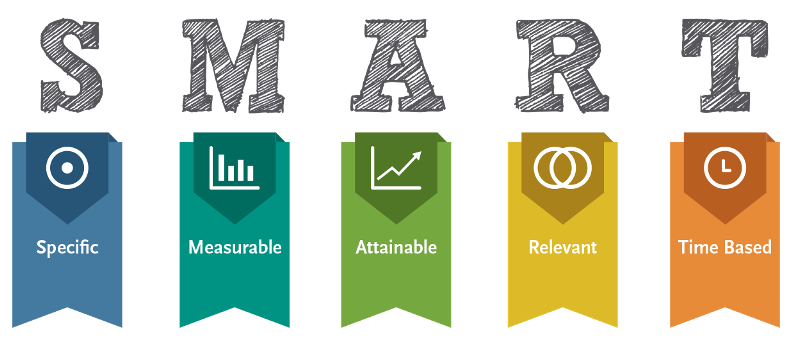
The basis of this cycle are SMART goals.
Setting SMART goals is crucial to ensure the success of the project and it is important to keep them mind at all stages.
They are set in the "Define phase".
The design thinking cycle consists of the following stages:
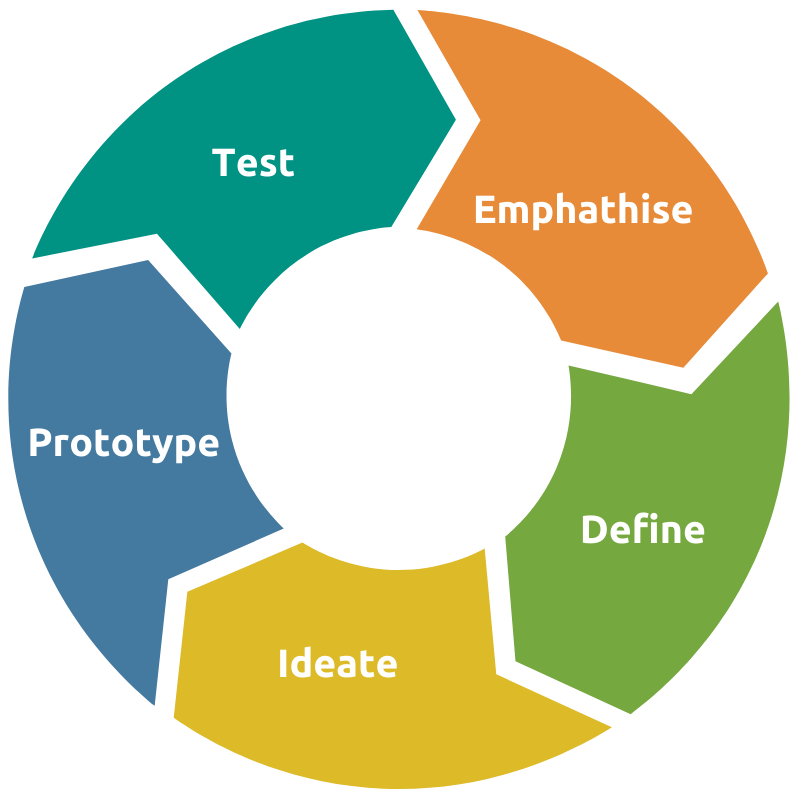
Empathise
Understand the problem by doing research. Get insights into motivations and experiences of all involved parties, as well as further information about the physical environment, expert opinions, and external factors.
Define
Define the problem as specific as possible and always use SMART goals to pinpoint the problem.
Start questioning how this problem could besolved.
Ideate
Generate ideas! Make use of techniques such as brainstorms. Start by collecting as many ideas as possible and narrow it down.
Prototype
Generate and prototype the product or parts of the product. Be experimental and try to find the best solution for the previous defined problem. Improve and re-examine them until they are ready for testing.
Test
It is possible to test the prototype on small external groups of people or conduct more extravagant testing processes.
Findings from this phase are often used to re-define problems and improve the understanding of the user and their interaction with the product.
Personal & Professional Development
“Personal and Professional Development”, or short “PPD” is part of the education at NHL Stenden.
The main goal is to support students in their education by providing personalised evaluations and feedback about their process.
The students need to show proof that they reached a certain level in 12 “Learning Outcomes”.
Students have a personal coach and individual evaluations several times per study year. Most evaluations are held in form of presentations.
Here are the learning outcomes with descriptions as given to the students:
Management & Entrepreneurship

Planning
&
Organizing
As a creative business professional you plan and organise the work of an organisation in a creative business environment by coordinating people, resources and processes in such a way that they contribute to predefined organisational objectives. You formulate goals, work together in structured ways, lead and monitor media processes, and know how to implement planning methods. You show your progress in this area through project and policy plans, process evaluations, implementation plans, job descriptions, etc.

Leading
& Controlling
You can purposefully and successfully lead and control people (both individually and in teams), processes and projects in the creative business environment. You involve people in the decision-making process, allocate tasks, encourage and motivate, take decisive action, and give and take feedback. You show your progress in this area through reflection reports, feedback reports and project logs/reports.

Innovating
You actively respond to changes within the creative business and convert these into ideas / opportunities for the organisation. You maintain national and international networks, know how to respond to change, are entrepreneurial and cooperative and are not afraid to present and implement innovative ideas. You show your progress in this area through innovative business plans and models, ideas for start-ups or feasibility studies.

Financial
Management
You make financial forecasts and analyses for new products and services (with or without a financial controller). You take the short and longer-term perspective into account and can explain this clearly to others. You are able to prove the commercial possibilities of products and services. You show your progress in this area through quotations, financial reports or financial paragraphs in business plans.
Communication, Research& Professional Development

Communication
You can communicate effectively and systematically in contexts in a wide variety of situations. You communicate clearly and appropriately within various (national and international) teams, adjust your tone of voice to the target audience, and are able to give different kinds of presentations as well as write different kinds of texts. You show your progress in this area through written plans and reports, language used in media products and services, presentations and pitches, and (feedback on) your communication within teams and towards clients.

Research
You plan and organise the work of an organisation in a creative business environment by coordinating people, resources and processes in such a way that they contribute to predefined organisational objectives. You formulate goals, work together in structured ways, lead and monitor media processes, and know how to implement planning methods. You show your progress in this area through project and policy plans, process evaluations, implementation plans, job descriptions, etc.

Reflection & Development
You plan and organise the work of an organisation in a creative business environment by coordinating people, resources and processes in such a way that they contribute to predefined organisational objectives. You formulate goals, work together in structured ways, lead and monitor media processes, and know how to implement planning methods. You show your progress in this area through project and policy plans, process evaluations, implementation plans, job descriptions, etc.


.png)
